
Sunroom Design Ideas from a Tulsa Interior Designer
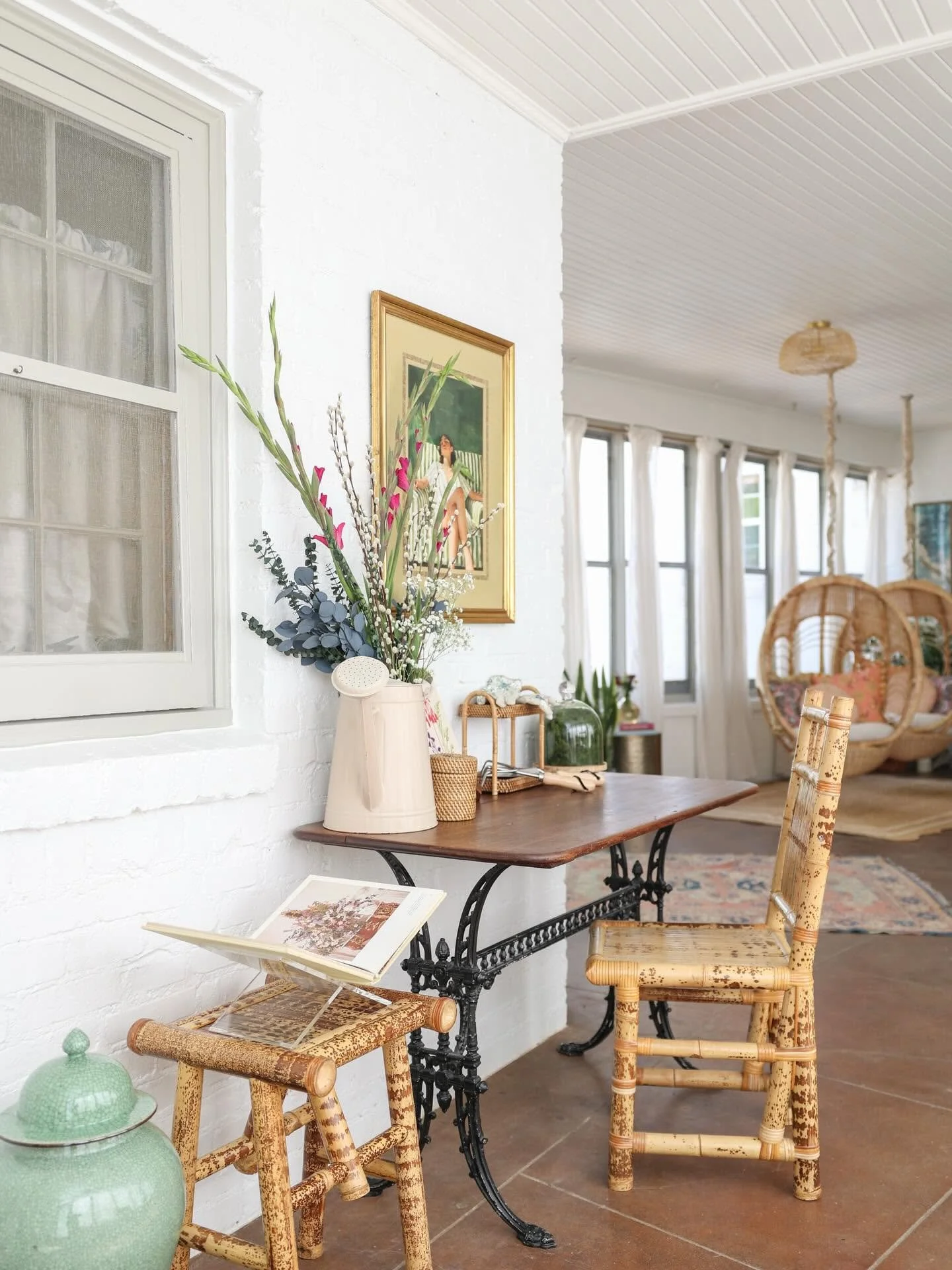
Every so often someone walks us into a sunroom and says, a little apologetically, “We never really use this room.” It’s usually one of the best rooms in the house. It has the most windows, the softest morning light, and a view of the yard. It just never got a plan.
That’s a shame, because a well designed sunroom can become the place everyone ends up. Coffee in the morning, homework after school, a glass of wine when the sun goes down. Below are the sunroom design ideas we come back to again and again, and the questions we ask before anything gets chosen.
Why so many Midtown Tulsa homes have a sunroom that doesn’t get used
Many of the older homes in Midtown neighborhoods like Maple Ridge, Swan Lake and Florence Park were built with sun porches or sleeping porches. Before air conditioning, these rooms were how people survived a Tulsa summer. Over the decades a lot of them were closed in, then turned into a catch all for the extra chair, the treadmill and the plants.
The bones are usually lovely: painted brick, old windows, tall ceilings, sometimes original tile. What’s missing is a reason to be there. Good sunroom interior design starts by giving the room a job.
Start with how you want to live in the room
Before we talk about a single finish, we ask our clients a few simple questions:
What time of day would you most like to be in here?
Is this a room for one person with a book, or for six people on a Saturday?
Does it need to work as a dining spot, a reading room, a place for the kids, or all three?
Should it feel like part of the house, or like a little escape from it?
The answers change everything. A morning room for two wants a small table, good task light and a comfortable pair of chairs angled toward the windows. A gathering room needs clear walkways, more seating and a layout that lets people face each other instead of the glass.
Design around the light, not against it
Sunrooms live and die by their light. In Tulsa, west facing glass can turn a room into an oven by late afternoon, while an east facing porch is often perfect until lunch. We look at which way the windows face and how the sun moves across the floor through the day before we plan the layout.
A few things that help:
Soft, layered window treatments. Sheer linen panels, like the ones in the photo above, filter harsh light without blocking the view. Pairing them with a lined shade gives you control on the hottest days.
Placing seating where the light is kind. The best spot for a reading chair is rarely right against the glass. A few feet back, with the light coming over your shoulder, is usually more comfortable.
Planning for the evening. Sunrooms are often forgotten after dark. A pendant, a pair of lamps and a dimmer turn the room into something you’ll use at night, too.
Choose materials that can handle sun, heat and real life
This is where a sunroom differs from the rest of the house. Fabrics fade, wood can dry out and some finishes simply don’t hold up under daily sun. We lean toward materials that look better with a little age:
Natural fibers like rattan, bamboo, cane and jute. They feel relaxed, they read as warm against white walls, and they’re light enough to move around.
Tile, brick or stone underfoot. Terracotta and other clay tiles stay cool in summer and give the room an easy, collected feel. A vintage rug softens it and adds color.
Performance or solution dyed fabrics on anything that will sit in direct sun.
Painted brick and beadboard. If your sunroom has original brick, painting it a warm white keeps the texture while bouncing light deeper into the house.
The photo at the top of this post shows a lot of these ideas working together: white brick, a beadboard ceiling, clay tile, bamboo seating, and hanging rattan chairs that make the far end of the room feel like a destination.
Make the sunroom feel connected to the rest of your home
One of the most common things we see is a sunroom that looks like it belongs to a different house. Maybe it was finished during a different decade or picked up leftovers from other rooms. The fix isn’t to make it match. It’s to make it relate.
We usually pull one or two threads from the adjoining rooms. That might be a wood tone, a color from a nearby rug or a metal finish, and then let the sunroom be a little more relaxed and a little more playful. A collected mix of old and new, like an antique cast iron table base or a framed painting found at an estate sale, gives the room personality without fighting the main living spaces. If you’d like to see how we tie rooms together across a whole home, our Midtown Modern and Bren Rose Residence projects are good examples.
Sun porch ideas for older homes
If your sun porch is original to the house, a little restraint goes a long way. A few things we keep in mind with historic home interior design:
Keep the windows if you can. Old wood windows can usually be repaired, and they give the room its character. Replacing them with something generic changes the whole feel.
Respect the scale. Many enclosed porches are narrow. Oversized sectionals swallow them. Pieces with open legs and lighter frames keep the room airy.
Let the architecture lead. Exposed brick, original tile and old trim are the reason these rooms are charming. We design around them rather than covering them up.
Small spaces in older homes can carry a lot of personality. Our Florence Park Powder project is a good example of how much a thoughtful plan can do in a modest footprint.
Enclosed porch ideas that work year round
A four season room is only four season if it’s comfortable in January and August. Before we design the inside, we ask whether the room has proper heating and cooling, decent insulation and windows that seal. If it doesn’t, those are conversations to have with your builder or HVAC contractor first.
Once the room is comfortable, a few design choices help it feel right in every season:
Layered textiles you can swap. Lighter linens in summer, heavier throws and pillows in winter.
A mix of lighting so the room feels warm on short winter days.
Plants that can handle the light in your specific room, since a west facing porch and a north facing one are very different places for a plant to live.
A view worth designing around
Sometimes the best thing a sunroom can do is get out of the way. When we designed our Oklahoma Lakehouse project, the goal was to make the view the focal point of the room, so we deliberately didn’t plan around a television. The same thinking works in a sunroom. If you look out on a garden, a big old tree or a pretty street, arrange the seating to face it and keep everything else quiet.
When it makes sense to work with an interior designer
A sunroom can absolutely be a weekend project. But if your sunroom is part of a bigger plan for your home, or if it’s the room that never quite came together, that’s where a designer earns their keep. We look at the whole house: how the rooms flow, how light moves through them, and how you actually live day to day.
Most of our clients come to us for residential interior design in Tulsa that covers several rooms or a whole home, and the sunroom often becomes a favorite once it’s part of that larger picture. Our residential projects generally start around $30,000, which lets us plan rooms properly rather than one piece at a time. You can browse more of our residential portfolio or read more about our interior design services in Tulsa.
Gracie Turner has been designing homes, restaurants and offices for more than 15 years, from New York to Melbourne and now back home in Tulsa. You can read more about Gracie or see what past clients have to say.
Frequently asked questions about sunroom design
What materials hold up best in a sunroom?
Natural fibers like rattan, bamboo and cane hold up well and suit the relaxed feel of most sunrooms. For upholstery, performance or solution dyed fabrics resist fading far better than standard cotton or silk.
How do I keep my sunroom from getting too hot?
Start with window treatments that filter light, such as sheer linen panels paired with lined shades, and keep seating a few feet back from west facing glass. If the room is uncomfortable for months at a time, talk with an HVAC contractor about heating and cooling before you invest in the interior.
Should my sunroom match the rest of my house?
It should relate, not match. Pull one or two colors, wood tones or finishes from the adjoining rooms, then give the sunroom a slightly more relaxed personality of its own.
Can an interior designer help with just a sunroom?
Sometimes, but sunrooms usually shine when they’re designed as part of a larger plan for the home. That way the room connects to the spaces around it and fits how your family lives.
Let’s make it the room everyone wants to be in
If you live in Midtown Tulsa and you have a sunroom, sun porch or enclosed porch that isn’t pulling its weight, we’d love to hear about it. Get in touch with Gracie Turner Design to talk through your home and see whether we’re a good fit.